.png)
Resilient Growth: How to Build a Marketing Strategy That Survives Economic Volatility
Look, nobody needs to tell you that 2026 feels like a rollercoaster. Interest rates shift, budgets tighten, CFOs get twitchy, & suddenly your Q2 growth plan looks like wishful thinking. But here's the thing: economic volatility doesn't have to mean pulling back. It means getting smarter.
The brands winning right now aren't spending more. They're spending better. They've ditched the growth-at-all-costs playbook & rebuilt their marketing around one core principle: resilience over reach.
Let's break down how to build a marketing strategy that doesn't just survive uncertainty: it thrives in it.
Why Traditional Growth Models Collapse Under Pressure
Most marketing strategies are built for sunny days. They assume stable budgets, predictable customer behavior, & linear growth trajectories. Then reality hits.
When economic conditions shift, these strategies fall apart because they lack three critical components:
• Flexibility – Rigid annual plans can't pivot when market conditions change overnight • Efficiency – Vanity metrics like impressions don't pay the bills when revenue becomes the only KPI that matters • Sustainability – Short-term hacks burn bright & die fast; you need systems that compound over time
The good news? Building resilience into your marketing isn't about doing more: it's about doing differently.
Shift From Spray-&-Pray to Audience-First Strategy
Here's where most teams go wrong: they treat economic downturns as a reason to cut everything & hope for the best. That's not strategy: that's panic.
Instead, place consumer needs front-and-center. During uncertainty, your highest-value segments become even more cautious & ROI-focused. Your messaging needs to evolve with them.
Identify Your Core Segments
Start by answering three questions:
• Who are your highest lifetime value customers? • What specific problems are they trying to solve right now: not six months ago? • How has their decision-making process changed under current conditions?
Once you understand this, tailor your campaigns to show how your brand solves their most pressing challenges. No fluff. No generic feature lists. Just substance that speaks directly to their evolving priorities.
This isn't about narrowing your audience: it's about sharpening your message so it actually lands. When budgets tighten, decision-makers don't have patience for vague value propositions. They need clarity, proof, & ROI projections they can take to their own leadership.
Build Real-Time Agility Into Your Operating System
Static plans are dead. If your marketing strategy lives in a PowerPoint deck from January, you're already behind.
Operational resilience requires replacing rigid annual roadmaps with agile, responsive frameworks that enable rapid testing & pivots. Here's how:
Create Flexible Budget Structures
Allocate 70% of your budget to proven channels & tactics, but reserve 30% for experimentation & rapid reallocation. This gives you room to capitalize on emerging opportunities or cut losses fast when something isn't working.
Establish Cross-Functional Decision-Making
Build a "marketing war room": a small, empowered team that can make swift decisions based on real-time data without waiting for monthly review cycles. This team should include:
• Marketing leadership • Revenue operations • Finance/budget owners • Product or customer success representation
Meet weekly (or daily during critical periods) to review performance data, market signals, & competitive moves. Make decisions fast, test assumptions faster.
Use Real-Time Performance Data as Your North Star
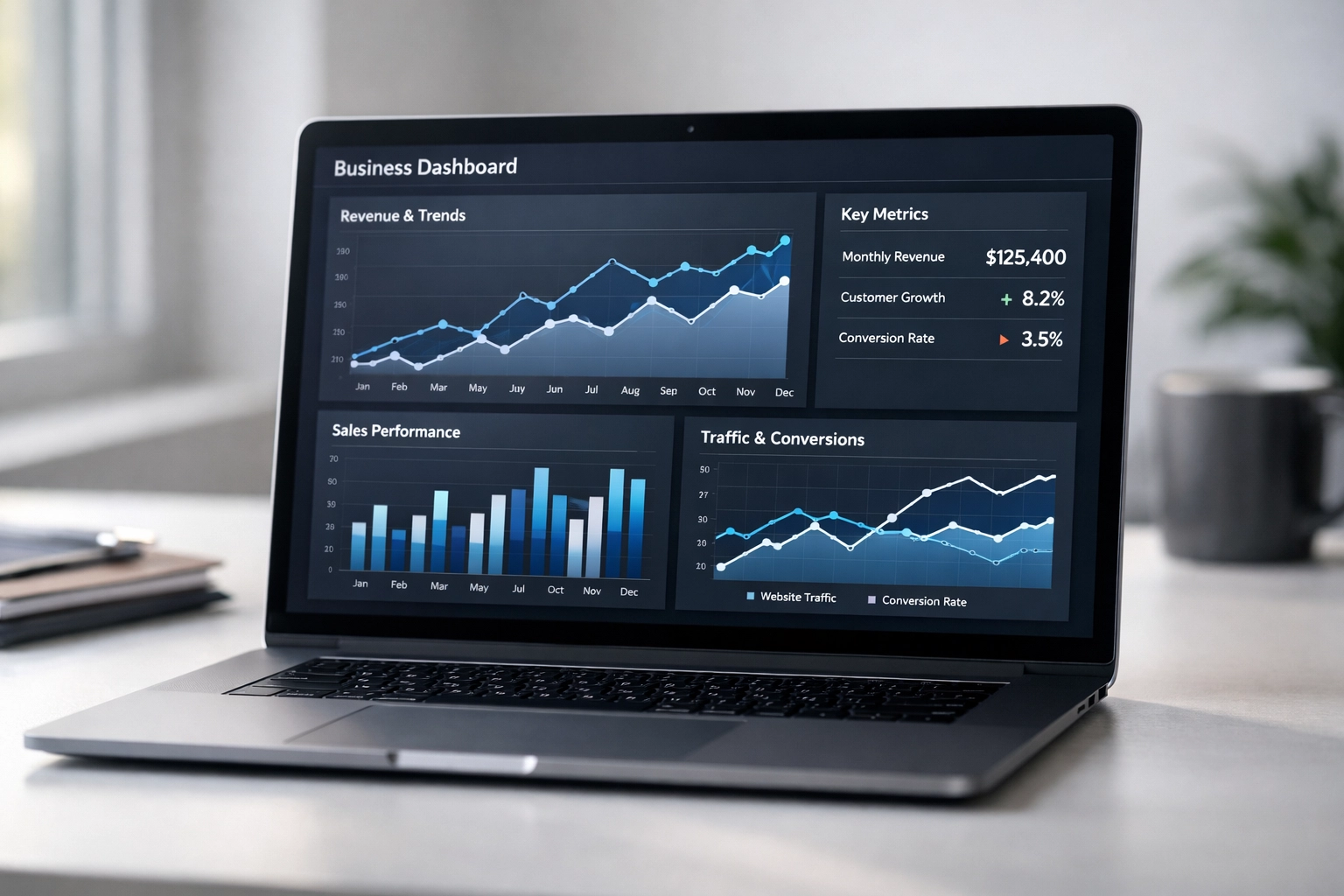
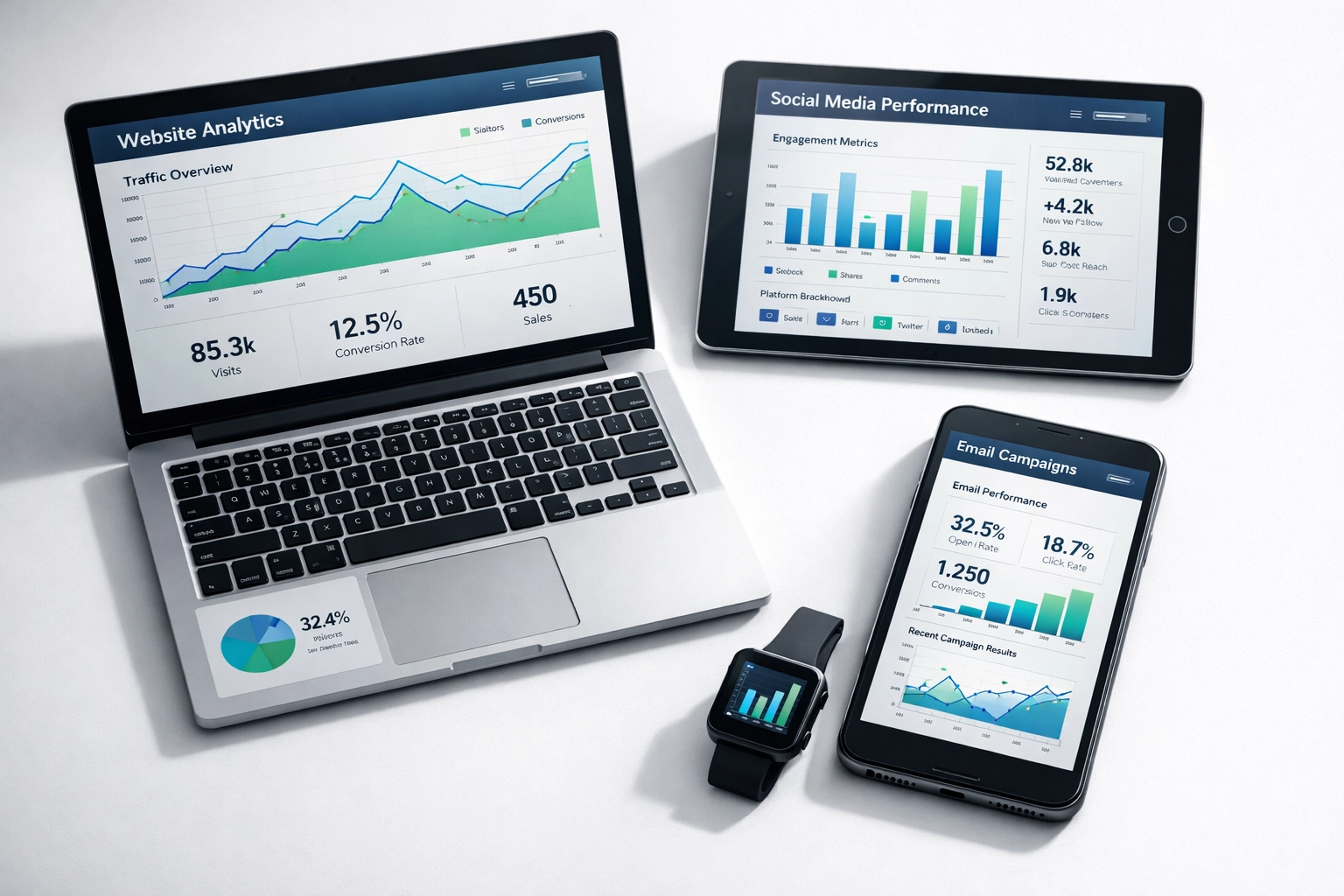
Stop waiting for end-of-month reports to tell you what worked. Implement dashboards that track leading indicators: engagement signals, conversion velocity, pipeline quality: so you can adjust tactics mid-flight.
The goal isn't to change everything constantly. It's to stay aligned with long-term objectives while making informed, data-driven decisions when conditions shift.

Optimize Channels Based on Performance, Not Assumptions
Here's a stat that matters: marketers using 5+ channels see up to 35% higher ROI compared to single-channel approaches. But: & this is critical: only when those channels are optimized based on actual performance data.
Focus on High-Impact, High-ROI Channels
During economic uncertainty, every dollar needs to work harder. That means:
• Audit ruthlessly – Which channels are driving revenue, not just traffic? • Cut strategically – Eliminate underperforming tactics, but don't slash budgets indiscriminately • Double down wisely – Reallocate saved budget to your highest-performing channels
Build an omni-channel strategy that includes digital display, email marketing, sponsored content, social ads, & events: but monitor performance obsessively. What worked in 2025 might not work in Q2 2026.
Test, Learn, Iterate
Use A/B testing frameworks to refine messaging, creative, & targeting continuously. Small, incremental improvements compound into significant efficiency gains over time. Personalize messaging based on segment-specific pain points. The more relevant your content, the higher your conversion rates & the lower your customer acquisition costs.
For teams struggling with multi-channel marketing operations, the key is measurement infrastructure: not more tools.

Leverage First-Party Data as Your Strategic Moat
Third-party data is unstable. Platform algorithms change. Privacy regulations evolve. But first-party data? That's an asset that strengthens over time.
The more you invest in understanding your customers directly: through owned channels, direct interactions, & behavioral tracking: the less vulnerable you become to external shifts.
Build Your Data Foundation
Focus on:
• Email list growth – Owned audiences you can reach without platform dependencies • Customer behavior tracking – Understanding what drives conversions, retention, & expansion • Feedback loops – Direct customer insights through surveys, interviews, & support interactions
Use comprehensive media mix measurement strategies, programmatic advertising, & direct mail retargeting to ensure every dollar works harder. First-party data strategy isn't just about compliance: it's about competitive advantage.
Make Data-Driven Decisions Without Analysis Paralysis
Real-time analysis matters, but don't get stuck in dashboard hell. Set clear decision triggers:
• If channel X drops below Y% conversion rate for Z consecutive weeks, reallocate 15% budget • If CAC increases by X% while LTV remains flat, pause new acquisition & focus on retention • If engagement drops X% across all channels, test new messaging immediately
These pre-defined rules enable fast action without endless meetings.
Prioritize Revenue Quality Over Quantity
Here's the shift that separates resilient companies from those that struggle: emphasizing revenue quality as much as revenue quantity.
During economic volatility, not all revenue is created equal. Focus on:
• Customer lifetime value (LTV) – Are you acquiring customers who stick around & expand? • Conversion efficiency – How much does it cost to move prospects through your funnel? • Retention rates – Existing customers are 5-7x cheaper to sell to than new ones
Budget constraints become an opportunity to improve overall efficiency. Build leaner, smarter marketing that adapts to both short-term needs & long-term goals.
Implement Value-Based Segmentation
Not all customers deserve equal attention. Segment by:
• Revenue contribution • Growth potential • Strategic value (referrals, case studies, market influence)
Allocate marketing resources accordingly. Your top 20% of customers likely drive 80% of value: make sure they're getting 80% of your retention & expansion focus.
Turn Uncertainty Into Competitive Advantage
Research consistently shows that brands maintaining or strategically reallocating budgets during economic downturns emerge stronger: with increased market share & consumer loyalty.
Your competitors are probably cutting marketing budgets right now. That's your opening.
While they retreat, you can:
• Capture attention – Less competition means lower acquisition costs & higher visibility • Build relationships – Invest in customer experience when others are scaling back • Test & learn – Use the downturn as a lab to optimize your entire marketing engine
View uncertainty not as a threat, but as an opportunity to outmaneuver competitors through sharper strategy, innovative thinking, & disciplined execution.
Measure What Actually Matters
Vanity metrics are out. Business outcomes are in.
Track these core indicators:
• Pipeline velocity – How fast are deals moving through stages? • Cost per qualified opportunity – Not just cost per lead • Revenue influenced by marketing – Attribution that ties to actual dollars • Net revenue retention – Are customers expanding or churning?
For teams looking to build more sophisticated measurement, RevOps frameworks provide the infrastructure to connect marketing activities to business outcomes.
Implementation: Start Small, Scale Smart
Building a resilient marketing strategy doesn't require a complete overhaul. Start with these three actions this week:
Audit your current channel performance – Identify your top 2-3 revenue-driving channels & your bottom 2-3 underperformers
Establish a weekly decision-making rhythm – Get key stakeholders aligned on reviewing performance data & making rapid reallocation decisions
Define your "revenue quality" metrics – Move beyond vanity metrics to track LTV, retention, & conversion efficiency
Then iterate. Test new messaging. Optimize underperforming channels. Double down on what's working.
Economic volatility isn't going anywhere. But neither is your ability to build marketing systems that scale sustainably, adapt quickly, & deliver measurable results regardless of external conditions.
The question isn't whether you can survive uncertainty. It's whether you'll use it to build a competitive advantage that lasts long after conditions stabilize.
Ready to transform your marketing operations for resilient growth? Let's talk.
Comments