.png)
The Hybrid Sales Funnel: Merging High-Touch Marketing with Low-Touch Operations
- fflowers32
- Feb 19
- 5 min read
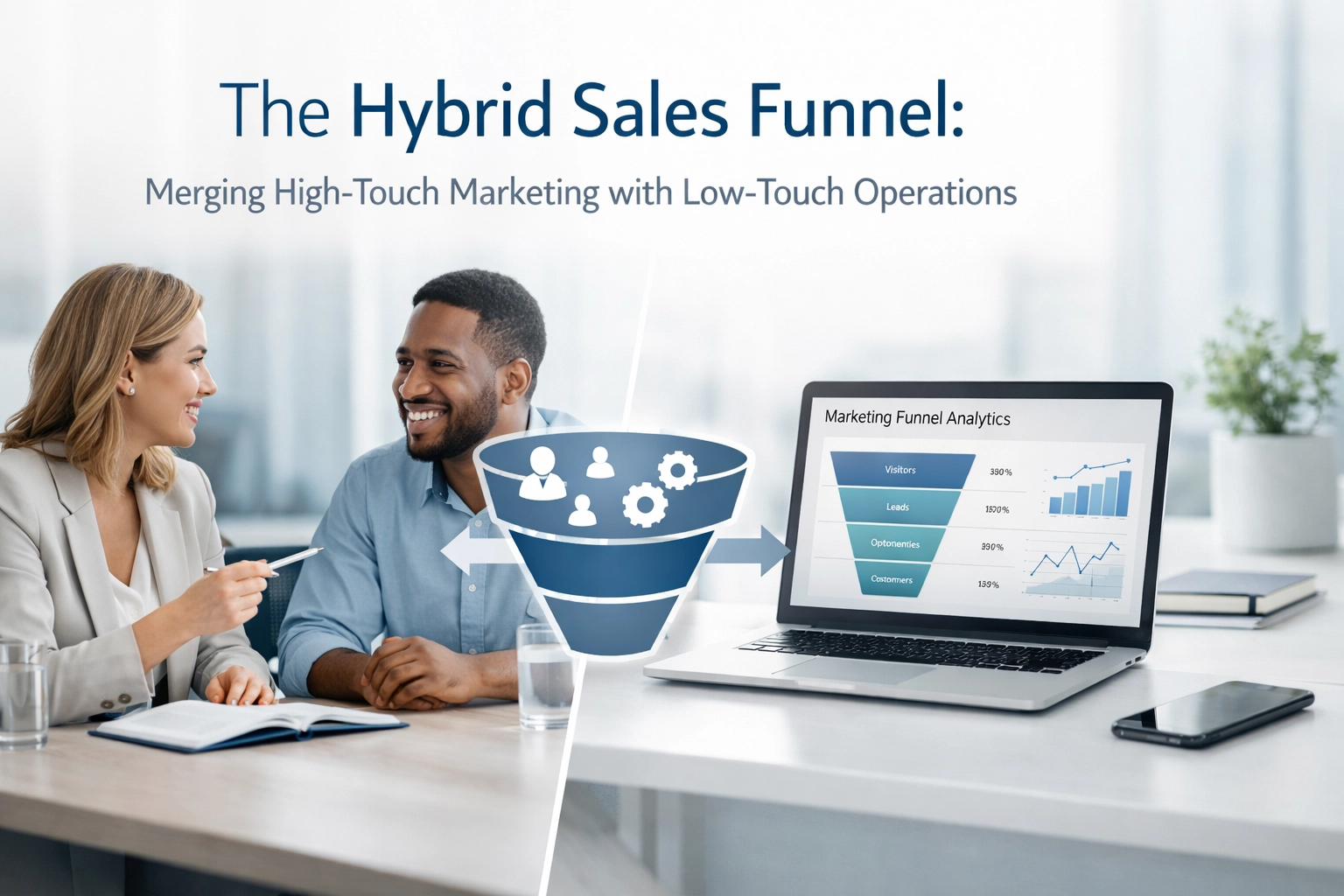
Here's the uncomfortable truth: your sales funnel is probably fighting itself.
Marketing builds these beautiful automated journeys: email sequences, chatbots, self-service demos. Meanwhile, your sales team is cold-calling prospects who've already decided they don't want to talk to anyone. Both teams are working hard, but they're working against each other instead of in sync.
The hybrid sales funnel solves this by doing something radically simple: it lets buyers choose their own adventure.
What Actually Is a Hybrid Funnel?
Think of it like a restaurant that offers both table service & a buffet. Some customers want recommendations from a server. Others want to browse & grab what they need without interaction. Neither approach is wrong: they're just different preferences.
A hybrid sales funnel merges automated, low-touch digital experiences with personalized, high-touch sales engagement. It's not about replacing your sales team with bots or forcing everyone into discovery calls. It's about building parallel tracks that meet buyers where they actually are.
The data backs this up: 61% of modern B2B buyers prefer a rep-free buying experience. But here's the kicker: companies offering both self-service & rep-led interactions are 3.9 times more likely to exceed profit expectations. The magic isn't in choosing one approach. It's in orchestrating both.

Why Your Current Funnel Is Probably Broken
Most companies build their funnel around what's convenient for them, not what buyers actually want. You've got three common dysfunction patterns:
The All-Automation Trap: Marketing runs everything through sequences & workflows. Prospects hit friction, need human help, & bounce because there's no easy escape hatch to talk to someone real.
The High-Touch Bottleneck: Every lead gets routed to sales, even the tire-kickers who just wanted to download a pricing sheet. Your SDRs spend 80% of their time on prospects who aren't ready, while genuinely hot leads wait in queue.
The Frankenstein Funnel: Marketing & sales built their own systems independently. Now you've got duplicate tools, conflicting data, & neither team trusts the other's metrics.
The hybrid approach fixes this by creating intentional pathways for both low-touch & high-touch buyers: and more importantly, by aligning your marketing & operations teams around a unified strategy.
Building the Dual-Track System
Here's how the tracks break down in practice:
Low-Touch Track (Marketing-Led)
This is where automation does the heavy lifting for buyers who prefer independence:
• Interactive product tours that let prospects explore features without scheduling a demo • ROI calculators & assessment tools that provide immediate value & self-qualification • Comprehensive resource libraries with implementation guides, case studies, & comparison content • Community forums & peer reviews where buyers can learn from existing customers • Automated onboarding sequences for straightforward use cases
The key is removing friction, not removing options. Every low-touch asset should have a clear "talk to someone" button for when buyers hit complexity.
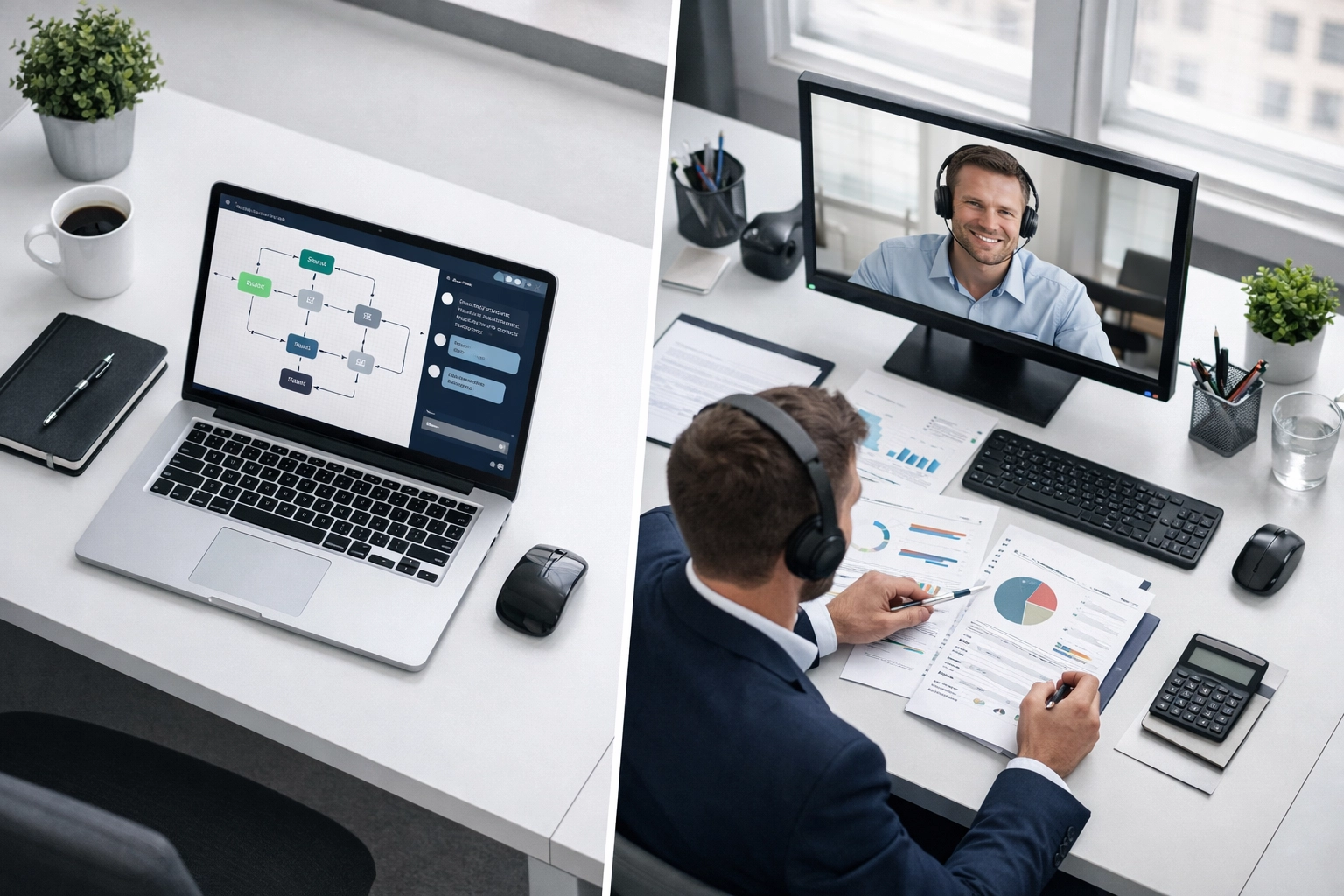
High-Touch Track (Sales-Led)
This is where your team adds strategic value for complex deals or relationship-driven buyers:
• SDR outreach to highly engaged prospects who've consumed multiple resources or hit pricing pages repeatedly • Discovery calls that uncover unique requirements automation can't address • Custom demos & proofs of concept tailored to specific business challenges • Executive alignment meetings for enterprise deals requiring stakeholder buy-in • Technical deep-dives with product specialists for implementation questions
Your sales team stops being order-takers & becomes strategic advisors. They focus on deals where human expertise genuinely moves the needle.
The Operations Layer That Makes It Work
Here's where most hybrid strategies fall apart: the marketing & operations teams never actually aligned on the infrastructure.
You need three foundational pieces:
Unified Data Architecture
Your CRM, marketing automation, & product analytics need to talk to each other. When someone downloads a resource, attends a webinar, then checks pricing: that full journey should be visible to both marketing & sales.
This isn't about buying more tools. It's about connecting what you already have so both teams work from the same truth.
Smart Routing Logic
Build rules that funnel leads to the right track based on behavior, not just demographics:
• High intent signals (pricing page visits, trial signups, competitor comparison searches) → Sales track • Research-phase activity (blog consumption, early-stage content downloads) → Marketing nurture track • Product usage patterns (power users, feature adoption) → Customer success touchpoints
The routing should be invisible to buyers but crystal clear to your internal teams.

Cross-Functional Playbooks
Marketing & sales need shared definitions of what constitutes a qualified lead, when hand-offs happen, & how to handle buyers who switch tracks mid-journey.
Create explicit agreements:
• MQL → SQL criteria that both teams accept • Response time SLAs for high-intent prospects • Re-engagement protocols for leads that go cold • Win/loss feedback loops so marketing learns what messaging actually closes deals
Measuring Hybrid Funnel Performance
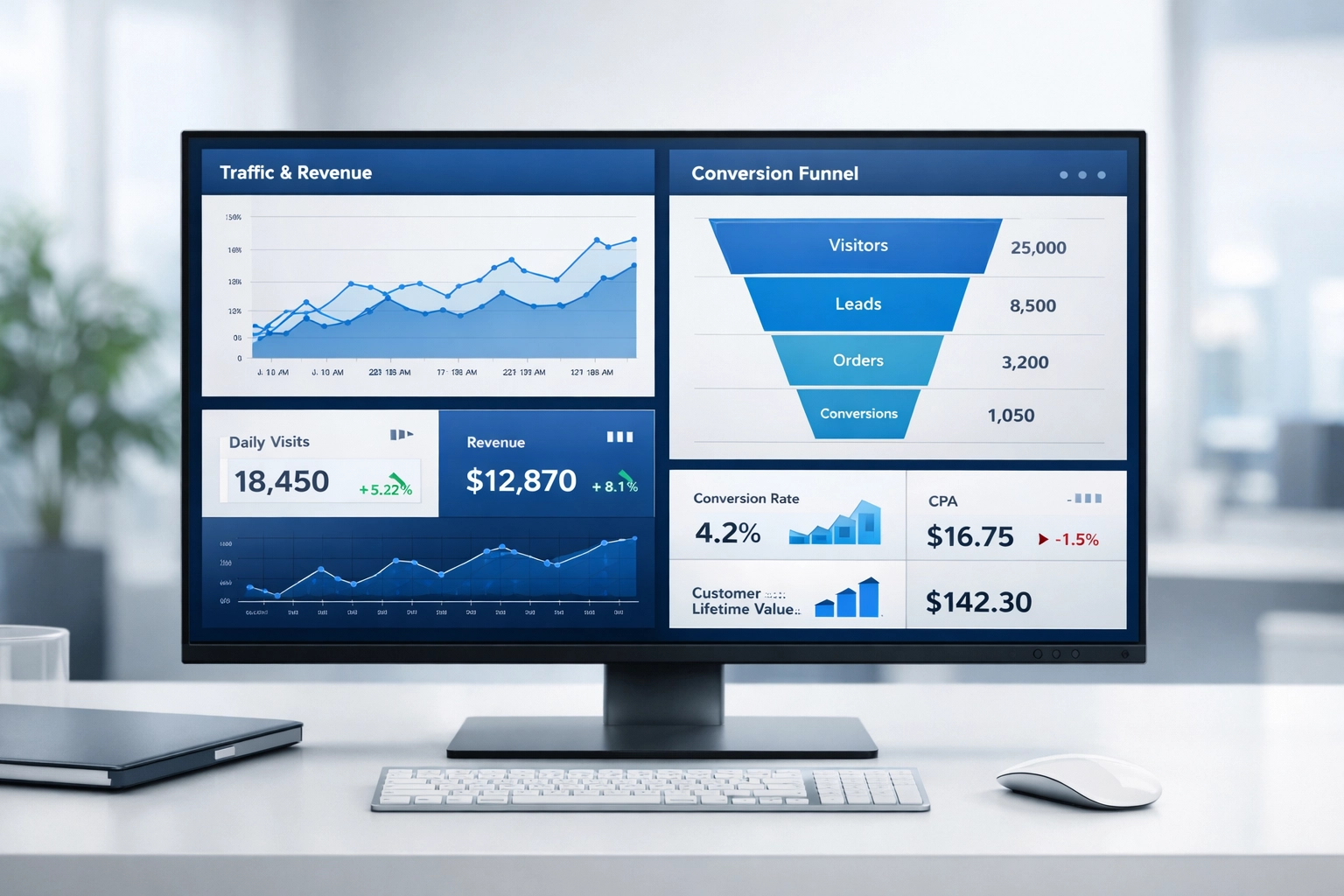
You can't optimize what you don't measure. Track metrics across both tracks:
Low-Touch Metrics: • Content engagement depth (pages viewed, time spent, return visits) • Self-service conversion rates (free trial → paid, resource download → product signup) • Support ticket volume (lower is better: means your resources answer questions)
High-Touch Metrics: • Lead response time from first engagement to sales contact • Discovery call → demo → close rates • Average deal size & sales cycle length for rep-assisted deals
Hybrid Health Indicators: • Track movement: how many buyers switch from low-touch to high-touch & vice versa • Revenue attribution by track (what percentage closes through each path) • Customer satisfaction scores by acquisition method
The goal isn't to force everyone into one track. It's to ensure both tracks perform & that buyers can easily move between them.
Aligning Marketing & Operations Around the Funnel
This is where the rubber meets the road. Your hybrid funnel only works if marketing & operations functions actually collaborate.
Hold regular alignment meetings where both teams review funnel performance together. Not finger-pointing sessions: strategic reviews of what's working & where bottlenecks exist.
Create shared incentives. When marketing gets credit only for MQLs & sales only for closed deals, you build silos. Structure bonuses around combined revenue targets & customer acquisition costs across the full funnel.
Build feedback loops. Sales should report back on lead quality & messaging effectiveness. Marketing should share engagement data that helps sales prioritize outreach. Make this bi-directional exchange non-negotiable.
Invest in shared technology. Stop letting marketing & sales buy tools independently. Evaluate platforms together based on how well they serve the full buyer journey, not just one team's workflow.
Getting Started Without Burning It All Down
You don't need to rebuild everything tomorrow. Start with one segment or product line:
Week 1-2: Map your current buyer journey. Where do prospects get stuck? Where do they request human help? Where do they churn because they couldn't find answers?
Week 3-4: Identify your highest-ROI improvements. Maybe it's building a better knowledge base. Maybe it's creating a "request a call" form on your pricing page. Pick the fixes that remove the most friction.
Week 5-6: Set up basic tracking so you can measure what happens when buyers use low-touch vs. high-touch options. You need baseline data before you can optimize.
Week 7-8: Run a pilot with one sales rep & one marketing manager owning the hybrid approach together. Learn what breaks, fix it, then scale.
The hybrid funnel isn't a trendy framework. It's a practical response to how buyers actually behave in 2026. They want independence when things are simple & support when things get complex.
Stop forcing them to choose between a fully automated maze or a mandatory sales pitch. Build pathways for both: and align your teams to make those pathways work together.
Need help building a hybrid funnel that actually converts? Let's talk about aligning your marketing & operations functions for measurable growth. Get in touch & we'll map out what a hybrid strategy looks like for your business.
Comments