.png)
The Zero-Click Era: Why Your SEO Strategy Needs GEO (And How to Start This Week)
- fflowers32
- Feb 23
- 6 min read
Your organic traffic is tanking. Not because your content is bad, but because users aren't clicking anymore.
Welcome to the zero-click era, where 6 out of every 10 Google searches end without a single click to your website. AI Overviews, featured snippets, and knowledge panels are answering questions directly on the search results page, cutting you out of the conversation entirely.
Traditional SEO isn't dead, but it's no longer enough. You need Generative Engine Optimization (GEO) : and you need it now.
The Zero-Click Reality: Your Traffic Isn't Coming Back
The numbers don't lie. Approximately 60% of Google searches now end without a click to any external website. For every 1,000 searches in the US, only around 360 result in actual visits to non-Google properties.
This shift hit hardest in specific content categories:
Informational queries like definitions and how-to guides
Local searches, which jumped from 40% zero-click to 70% zero-click
Quick answer queries that AI can resolve instantly
Comparison searches where featured snippets provide the answer
Your carefully optimized blog posts still rank. Users still see your content. They just never visit your site.
That's the problem GEO solves.

What Is Generative Engine Optimization (GEO)?
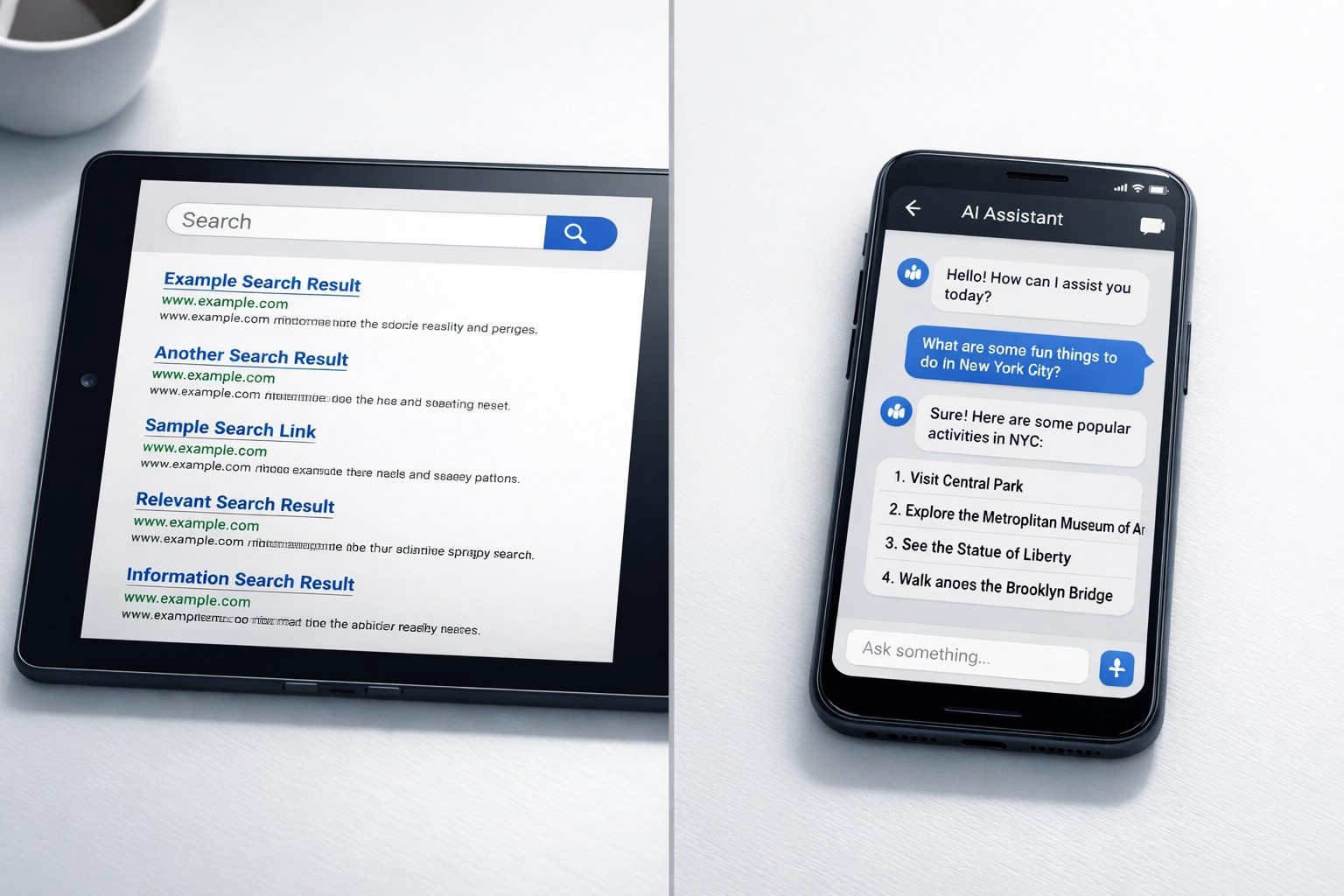
Generative Engine Optimization is the practice of optimizing content specifically for AI-powered search experiences and large language models. While SEO focuses on ranking in traditional search results, GEO ensures your content gets selected, cited, and displayed by AI systems like ChatGPT, Google's AI Overviews, Bing Chat, and Claude.
Think of it like this: SEO gets you on the list. GEO gets you quoted.
The distinction matters because AI engines don't just index your content : they interpret it, synthesize it, and present it as authoritative answers. If your content isn't structured for AI consumption, you're invisible in the zero-click era.
How GEO Differs from Traditional SEO
Traditional SEO optimizes for algorithms that rank pages. GEO optimizes for algorithms that understand, extract, and recombine information.
Key differences:
SEO targets keyword rankings; GEO targets citation & attribution
SEO uses meta descriptions; GEO uses structured context & entity relationships
SEO builds backlinks; GEO builds semantic authority & topical depth
SEO measures clicks; GEO measures brand mentions & attribution in AI responses
You're no longer competing for position 1. You're competing to be the source AI trusts.
Why Your Business Can't Ignore This Shift
Revenue impact aside, the zero-click era fundamentally changes how prospects discover and evaluate you.
Consider this scenario: A potential client searches "how to audit tech stack for ROI." Google's AI Overview pulls insights from three sources, synthesizes them, and presents a complete answer. Your competitor gets cited. You don't. The prospect never knows you exist.
That's not a traffic problem. That's a visibility crisis.
For businesses in consulting, B2B services, and knowledge-driven industries, AI-powered search is becoming the primary discovery channel. If you're not optimized for it, you're betting your entire pipeline on diminishing returns.
The 5-Step GEO Framework You Can Start This Week
You don't need to rebuild your entire content strategy. You need to adapt what you already have. Here's how to start optimizing for generative engines immediately.
Step 1: Audit Your Content for AI-Friendliness
Review your top-performing content through an AI lens. Ask yourself:
Does this content answer questions completely and concisely?
Are complex concepts broken down into digestible components?
Do you define key terms and industry jargon clearly?
Is the structure logical and easy for AI to parse?
AI engines prioritize clarity over cleverness. If a human has to read three paragraphs to understand your point, AI won't cite you.
Action item this week: Pick your five highest-traffic blog posts. Run each through ChatGPT or Claude with this prompt: "Summarize the key insights from this content." If the AI struggles or misinterprets your points, your structure needs work.
Step 2: Build Semantic Depth Around Core Topics
GEO rewards comprehensive topical authority, not scattered keyword targeting. Instead of creating 20 shallow posts, create 5 deep resources that cover every angle of a core topic.
Map your content clusters:
Identify your 3-5 primary service areas or expertise zones
List every question, objection, and subtopic within each area
Create pillar content that addresses the full topic comprehensively
Develop supporting content that goes deep on specific angles
This isn't keyword stuffing. It's demonstrating expertise AI can recognize and cite.
Action item this week: Choose one core topic relevant to your business. List 15-20 questions prospects actually ask about it. Identify gaps in your current content coverage.
Step 3: Structure Content for AI Extraction
AI engines love clean, hierarchical information that's easy to extract and attribute. Your content structure directly impacts citation likelihood.
Optimize with these formatting principles:
Use clear, descriptive headings that signal topic shifts
Lead sections with concise summary sentences
Break complex ideas into numbered steps or bulleted lists
Define technical terms in context, not separate glossaries
Include direct answers before diving into nuance
Compare these two approaches:
Poor for GEO: "There are several considerations when evaluating operational frameworks, including complexity, scalability, and resource requirements, though each organization's needs vary significantly."
Strong for GEO: "Evaluate operational frameworks using three criteria: complexity (can your team implement it in 30 days?), scalability (does it support 10x growth?), and resource requirements (what's the true total cost?). Most mid-market companies prioritize scalability over complexity."
The second version gives AI exactly what it needs to cite you confidently.
Action item this week: Rewrite the opening paragraphs of your top 3 posts to include direct, quotable answers in the first 2-3 sentences of each section.
Step 4: Create Citation-Worthy Data Points
AI engines prioritize content with concrete data, specific frameworks, and measurable outcomes. Vague statements don't get cited.
Transform generic claims into citation magnets:
Replace "many companies struggle with" with "68% of mid-market companies report challenges with"
Swap "this approach improves results" for "this framework increased conversion rates by 34% across 12 implementations"
Change "our process includes several steps" to "our 4-phase process delivers measurable ROI in 90 days"
You don't need original research for every claim. You can cite existing studies, aggregate client outcomes (anonymized), or reference industry benchmarks. The key is specificity.
Action item this week: Review your service pages and top blog posts. Identify 10 places where you make claims without supporting data. Add specific numbers, timeframes, or frameworks.
Step 5: Optimize for Conversational Queries
Generative AI responds to natural language questions, not keyword strings. Your content needs to match how people actually ask questions, not how they used to type search queries.
Shift from keyword optimization to question optimization:
Build a question bank based on real conversations with clients, sales calls, and support tickets. These authentic questions are exactly what prospects ask AI engines.
Action item this week: Record or transcribe your next 3 client conversations. Extract every question they ask. Create content that answers those specific questions in the exact language they used.
Measuring GEO Success Beyond Traffic
Zero-click doesn't mean zero-value. You need new metrics that capture AI-driven visibility and authority.
Track these indicators:
Brand mentions in AI-generated responses (test your key topics in ChatGPT, Claude, and Google AI Overviews)
Attribution frequency (how often your content gets cited as a source)
Featured snippet ownership for high-intent queries
Knowledge panel presence and accuracy
Voice search results and smart assistant responses
Use tools like SparkToro, AnswerThePublic, and AlsoAsked to monitor how AI systems reference your brand and content in response to industry queries.
Set up monthly audits where you test 20-30 core questions related to your expertise across multiple AI platforms. Document which platforms cite you, which competitors appear, and where gaps exist.
The Integration Play: GEO Meets Your Existing Strategy
GEO doesn't replace your current marketing efforts. It amplifies them.
Integrate GEO into your existing workflows:
Content creation: Add AI-optimization as a quality checklist item
SEO audits: Include GEO metrics alongside traditional ranking data
Topic planning: Prioritize questions AI engines struggle to answer well
Internal linking: Create clear semantic pathways between related topics
Your existing content library is your biggest GEO asset. You don't need to start from scratch. You need to retrofit what works.

What Happens If You Wait
The brands that dominate AI-powered search in 2026 are the ones optimizing for it today. Waiting means:
Competitors establish topical authority you'll struggle to overcome
AI systems develop citation preferences that exclude you by default
Your existing content gets buried under GEO-optimized alternatives
You lose pipeline to brands prospects discover through AI interactions
This isn't fear-mongering. It's pattern recognition. Every major search shift : from desktop to mobile, from text to voice : rewarded early adopters and punished hesitation.
The zero-click era is here. Your prospects are already using AI to make decisions. The question isn't whether to adapt. It's whether you'll adapt before your competitors do.
Start This Week
Pick one action item from each step above. You don't need perfection. You need momentum.
By Friday, you should have:
Audited 5 key posts for AI-friendliness
Mapped content gaps around 1 core topic
Restructured 3 posts with clearer answers up front
Added 10 specific data points to existing content
Built a question bank from 3 client conversations
That's your GEO foundation. Everything else builds from there.
The algorithms are changing. Your strategy needs to change with them. Start optimizing for the search engines that actually matter : the ones answering questions before anyone clicks.
Need help building a GEO strategy that aligns with your broader growth goals? Check out our approach to data-driven decision-making and how we help businesses adapt to changing market dynamics through resilient growth strategies.
Comments