.png)
Generative Engine Optimization Explained in Under 3 Minutes: Why SEO Isn't Enough Anymore
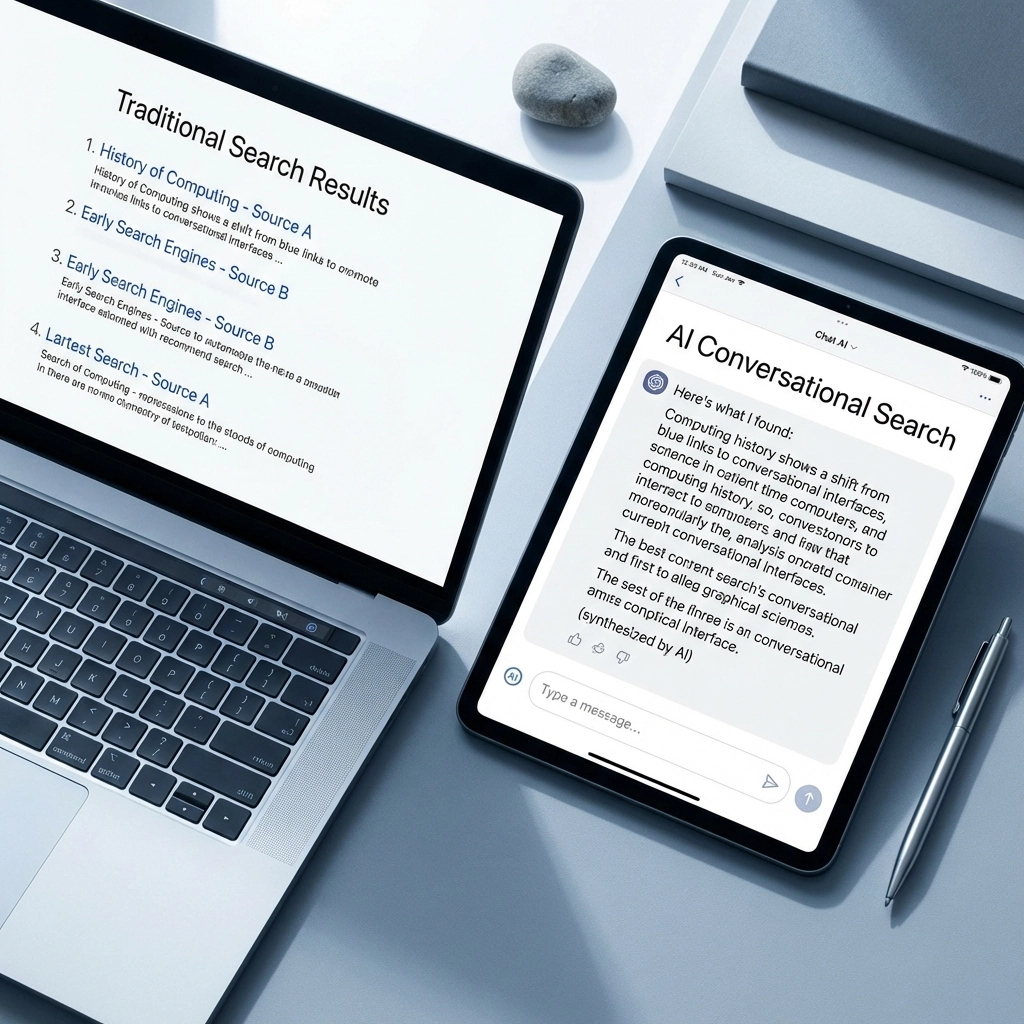
The digital landscape shifted overnight. While businesses were perfecting their SEO strategies, AI engines like ChatGPT, Claude & Perplexity quietly revolutionized how people find information. Traditional search results? They're becoming secondary to AI-generated answers that synthesize multiple sources into comprehensive responses.
Enter Generative Engine Optimization (GEO) : the new frontier that determines whether your content gets cited in AI answers or disappears into digital obscurity.
What Is Generative Engine Optimization?
GEO optimizes your content to be extracted, synthesized & cited by AI-driven search engines rather than simply ranked by traditional algorithms. Think of it like this: instead of competing for a spot on page one, you're competing to become the authoritative source that AI engines quote directly in their responses.
This isn't about gaming the system : it's about positioning your expertise where your audience actually gets their answers in 2026.

Why Traditional SEO Falls Short in the AI Era
The fundamental rules changed, but most businesses haven't caught up. Here's the stark reality of how SEO & GEO operate on completely different principles:
Aspect | Traditional SEO | Generative Engine Optimization |
Primary Goal | Rank high in search result lists | Get cited in AI-generated answers |
Query Type | Short keywords (avg. 4 words) | Conversational questions (avg. 23 words) |
Optimization Focus | Keywords, backlinks, page authority | Structure, clarity, authority, citations |
Output Format | List of blue links | Synthesized narrative responses |
User Behavior | Click through to websites | Consume answers directly |
The Fundamental Shift
Users now ask complex, conversational questions like "What's the most effective business transformation strategy for mid-sized manufacturing companies in 2026?" instead of searching "business transformation strategy."
AI engines synthesize information from multiple sources to create comprehensive responses. Your perfectly optimized blog post might rank #1 on Google but never appear in an AI answer if it lacks the structural & authoritative qualities these models prioritize.
What Actually Works for GEO: Research-Backed Strategies
Recent studies from Princeton, Georgia Tech & other leading institutions identified the optimization methods that deliver real results. Here's what moves the needle:
Quotation Additions
Direct quotes from authoritative sources boost visibility significantly. AI engines prioritize content that includes expert statements & credible references.
Statistics Additions
Including data, research findings & measurable outcomes improves AI selection rates. Numbers provide the concrete evidence AI models seek when synthesizing responses.
Fluency Optimization
Clean, well-written content that's easy for AI to process outperforms keyword-stuffed alternatives. Clarity beats cleverness every time.
Cited Sources
Explicitly linking to & crediting authoritative references signals expertise. AI engines reward content that demonstrates thorough research.
Technical Terms
Precise, domain-specific language helps AI models understand your expertise level. Don't dumb down your content : elevate it with professional terminology.
Authoritative Communication
Position yourself as an expert source through confident, declarative statements backed by evidence.
The Winning Combination
Research reveals that combining fluency optimization with statistics additions delivers the strongest results. Simple tactics like keyword stuffing perform poorly, while well-sourced, clearly structured content excels.
These optimization methods can boost source visibility by up to 40% in generative engine responses : a game-changing improvement for businesses seeking thought leadership positioning.
Implementation Strategies That Drive Results
Structure for AI Consumption
Create scannable content with clear headers, bullet points & short paragraphs that models can easily extract. AI engines prefer information they can quickly parse & synthesize.
Effective structure includes: • Clear hierarchical headers that outline your main points • Bullet points with specific, actionable insights • Short paragraphs (2-3 sentences maximum) • Logical flow from problem to solution • Concrete examples that illustrate key concepts
Write Conversationally While Maintaining Authority
Focus on comprehensively answering questions rather than targeting keywords. Users ask AI engines complete questions : your content should provide complete answers.
Best practices: • Address the full scope of user questions • Anticipate follow-up questions & address them • Use natural language that mirrors how people actually speak • Maintain professional credibility through expert insights • Include real-world applications & case studies
Leverage Structured Data Markup
Use schema.org markup to help AI engines understand your content context. This technical foundation ensures AI models can properly categorize & cite your expertise.

Optimize for Question-Based Queries
Transform your content strategy around the questions your audience asks AI engines. Instead of optimizing for "business consulting," create content that answers "What's the most effective approach to business transformation for companies struggling with operational inefficiency?"
Question optimization tactics: • Research actual questions in your industry using AI tools • Create comprehensive answers that cover all aspects • Include related questions & answers within your content • Structure responses as complete solutions, not partial information
The Competitive Advantage of Early Adoption
Most businesses remain focused on traditional SEO while their competitors gain ground in AI-powered search. Early GEO adoption creates sustainable competitive advantages:
Thought Leadership Positioning
Getting cited by AI engines establishes your expertise in front of qualified prospects researching solutions.
Quality Lead Generation
Users who find your insights through AI responses are typically further along in their buyer's journey.
Future-Proof Marketing
As AI search continues growing, your optimized content compounds in value over time.
Enhanced Brand Authority
Regular citations in AI responses build recognition & trust among your target audience.
Measuring GEO Success
Track these key metrics to optimize your GEO performance:
• Citation frequency : How often AI engines reference your content • Source attribution : Whether you receive proper credit for insights • Query coverage : The range of relevant questions your content addresses • Competitive visibility : Your share of citations compared to industry competitors

Transform Your Content Strategy for the AI Era
The businesses winning in 2026 understand that content optimization extends beyond traditional search engines. They're creating comprehensive, authoritative resources that AI engines cite, reference & recommend.
Your next steps: • Audit existing content for GEO optimization opportunities • Restructure high-performing pieces with clear headers & citations • Create new content addressing specific question-based queries • Implement structured data markup across your key pages • Monitor citation frequency & adjust strategies based on performance
The shift to AI-powered search isn't coming : it's here. Businesses that adapt their content strategies now position themselves as authoritative sources in their industries.
Ready to transform your content strategy for the AI era? Contact Greatstille to develop a comprehensive GEO strategy that positions your expertise where your prospects are actually searching.
Comments